ACCRA 2026 Accreditation Management System
An end-to-end accreditation platform for an international athletics event in Accra, replacing spreadsheets and hand-printed passes with delegation self-onboarding, QR badges, and zone-level venue access control for thousands of athletes, officials, media, and VIP guests.
- CLIENT
- Ghana Athletics Association
- CATEGORY
- Event platform
- STACK
- Next.js, TypeScript, Tailwind CSS, TanStack Query, pdf-lib, next-intl
- YEAR
- 2026
- LINKS
- Live site
Overview
An end-to-end accreditation platform for an international athletics event in Accra, replacing spreadsheets and hand-printed passes with delegation self-onboarding, QR badges, and zone-level venue access control for thousands of athletes, officials, media, and VIP guests.
Challenge
A major athletics event moves thousands of people into a city in a matter of days — athletes, team officials, media, and VIP guests arriving from dozens of countries, every one of whom has to be verified, badged, and routed through secured venue zones. That work traditionally runs on spreadsheets, email chains, and hand-printed passes: slow to administer, painful to correct, and leaving real gaps at the gate on competition day.
Approach
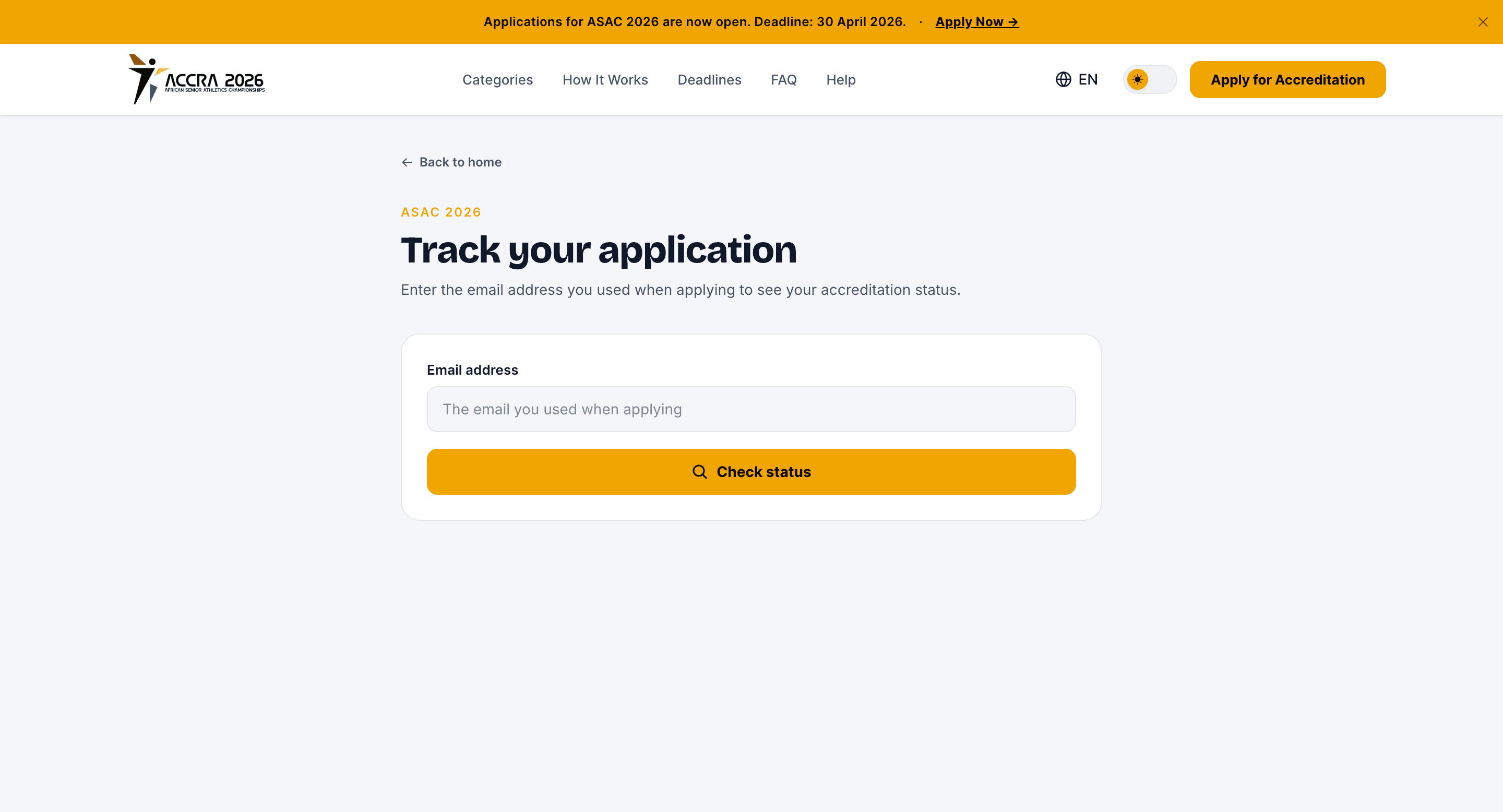
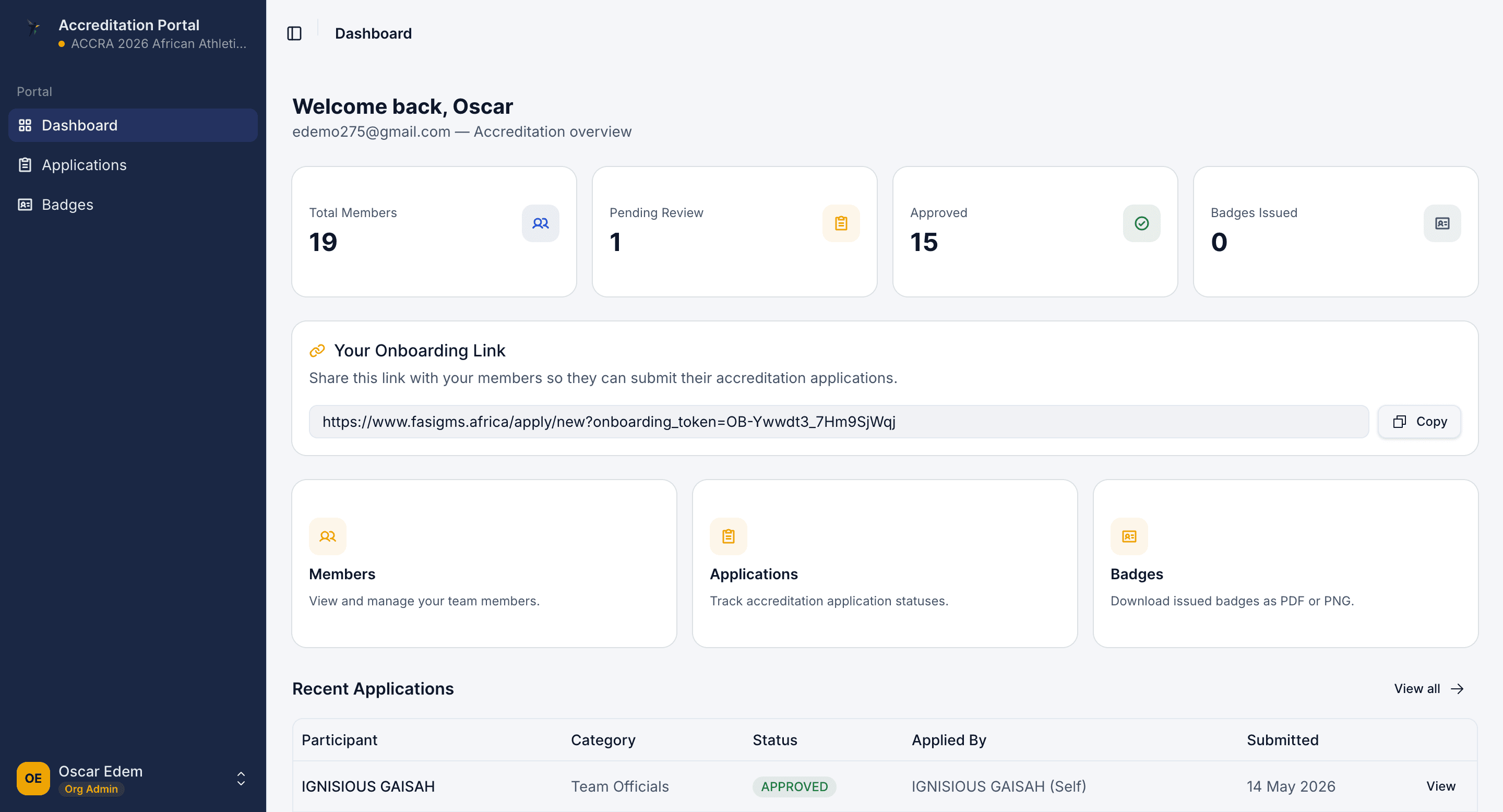
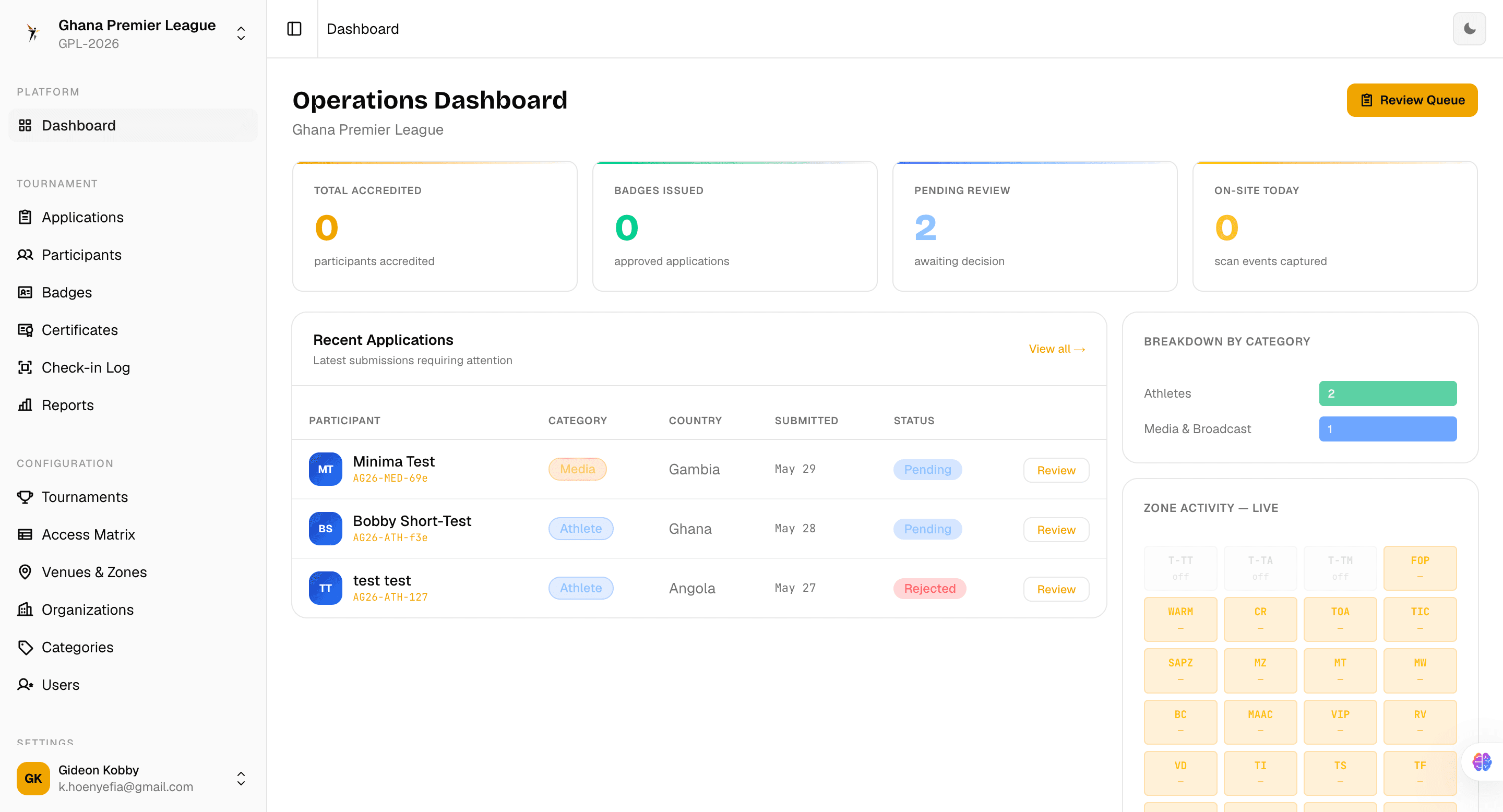
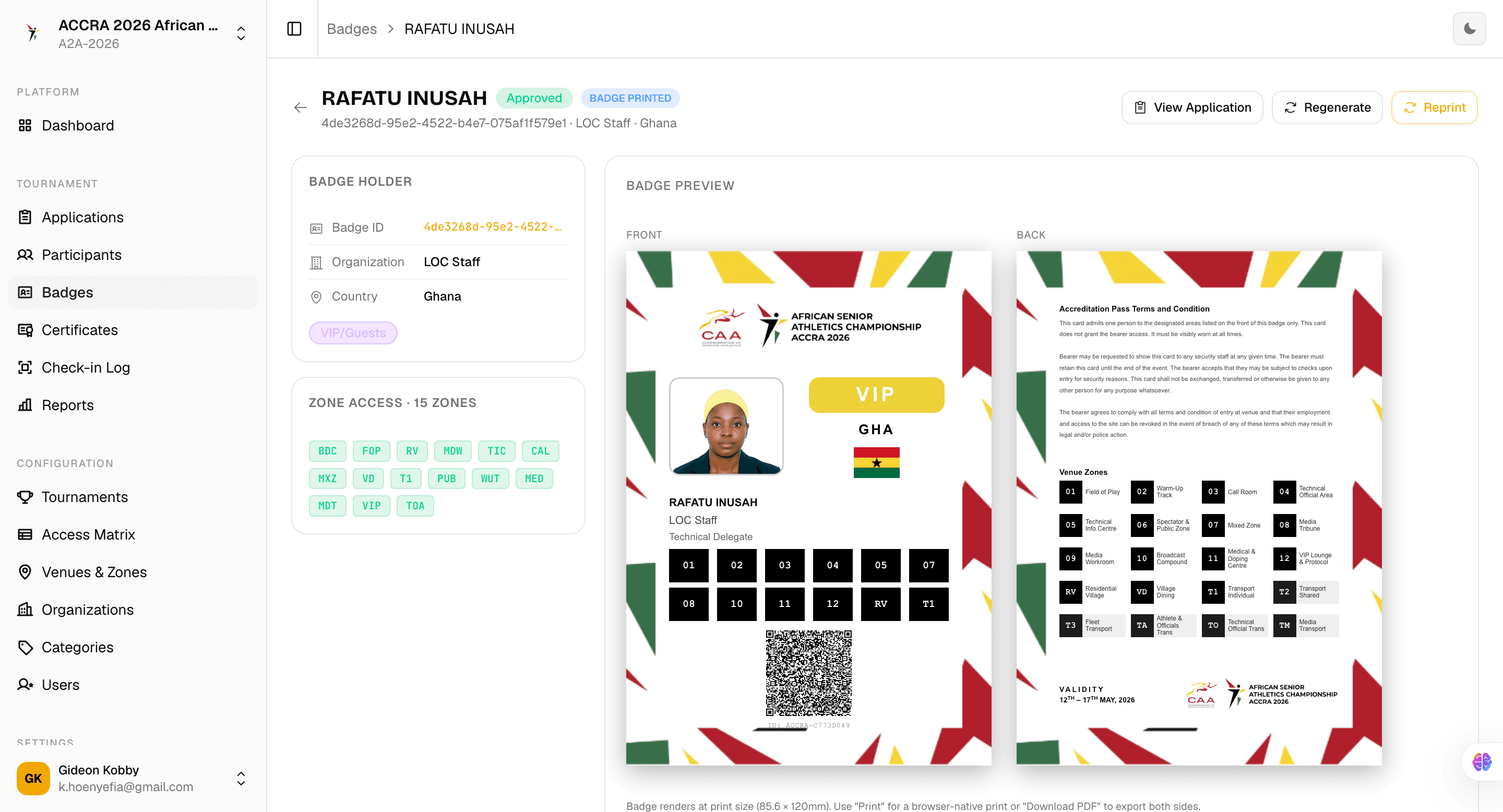
ACCRA 2026 replaces it with one system. Federations and delegations receive tokenized invite links and onboard their own members, moving data entry to the people who actually hold the information; organisers then review applications by accreditation category and issue QR-coded badges generated as print-ready PDFs that holders can download themselves. An access matrix maps each category to the venue zones it may enter, and gate staff scan badges on site to check people in against those rules — so access control is enforced by the badge rather than by a printed list. Certificates are issued with public verification by number, and every action is written to an audit trail for post-event reporting.
Key features
- 01Delegation self-onboarding
- 02QR-coded accreditation badges
- 03Zone-level venue access control
- 04Multi-language interface
Technical decisions
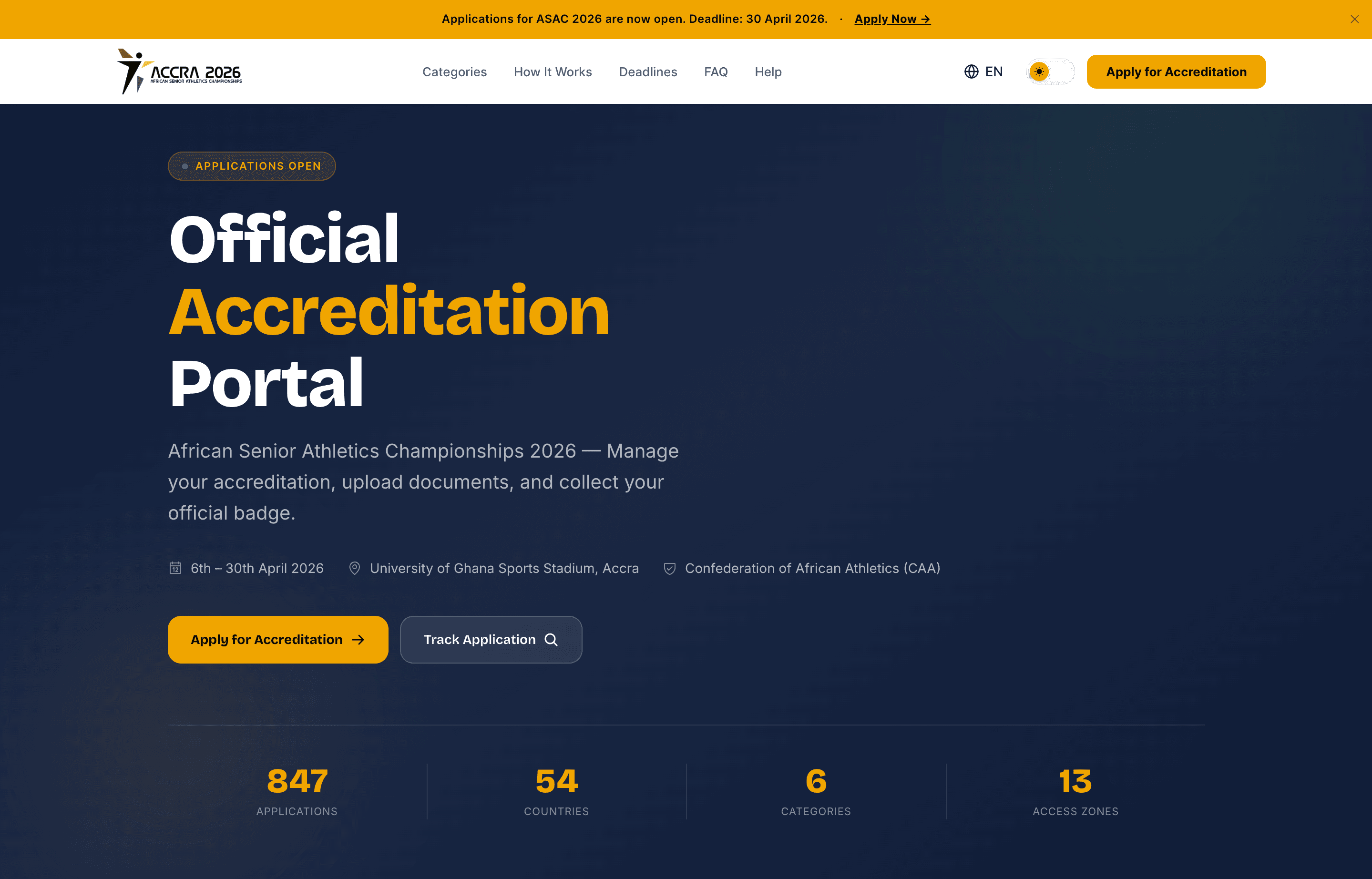
It ships as two Next.js applications against a shared API — a public portal for applicants and delegations, and an operations dashboard for accreditation staff — localized in English, French, Spanish, and Portuguese so international delegations can complete onboarding in their own language.
How it works, screen by screen.